
Ideas Well Explained
Check this videos and understand how we really can help you


Experimental Simulation Research
Provide a short summary of your recent projects, highlighting the most important things.
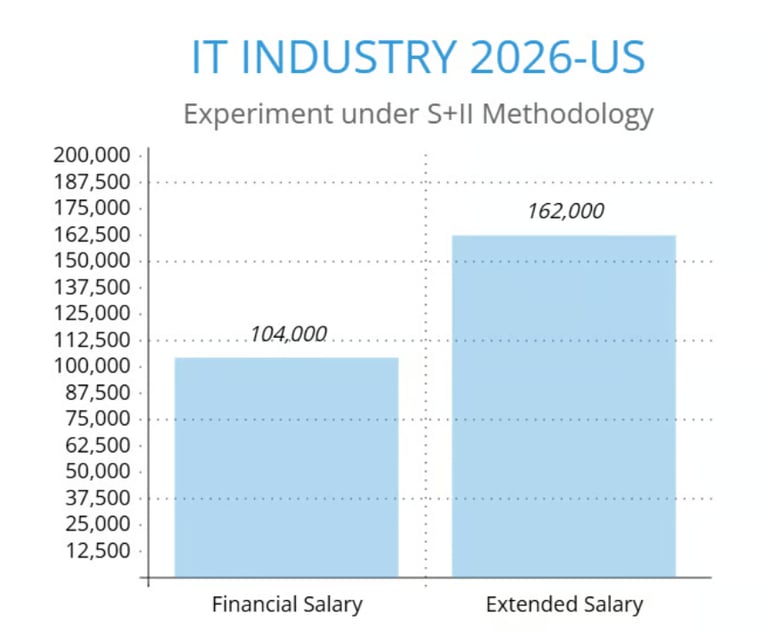
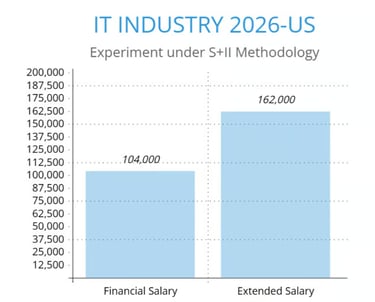
The benefits of flexibility in the U.S. IT Sotware Programming Industry 2026
This experimentation and modeling document by Econtime Consultants presents a possible simulation of the economic benefits that employees working as programmers in software companies in the United States could receive in 2026.
The study estimates, as a hypothesis, the additional non-salary benefits employees may obtain on top of their financial salaries after economically evaluating the impact of Flexible Work Arrangements (FWAs). While the financial salaries earned by programmers are generally known, the real direct economic impact on employees of working in a flexible or remote environment remains largely unknown.
This document aims to calculate the deviation between the financial salary actually received and the broader economic impacts generated by having more personal free time, as well as the savings in direct work-related costs resulting from flexible work.
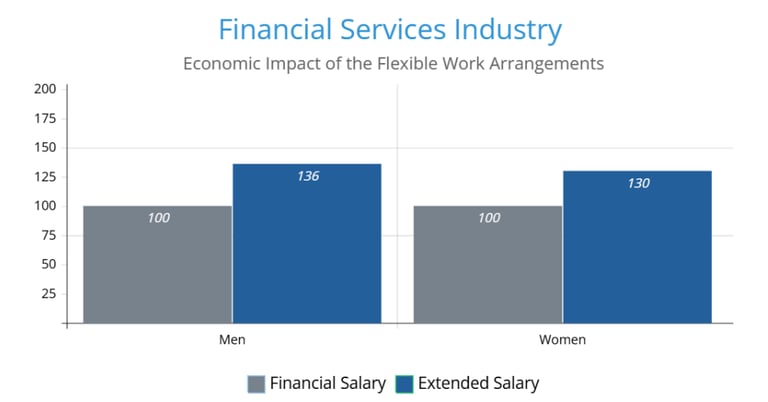
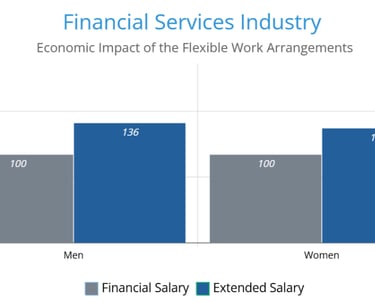
The benefits of flexibility in the Financial Services Industry in the U.S. 2026
The rapid adoption of remote and hybrid work arrangements has transformed the employment landscape in the United States, particularly within the financial services industry. While the direct impact of remote work on productivity and compensation has been widely studied, less attention has been paid to the economic value generated through increased flexibility and the recovery of personal time. This analysis seeks to quantify that value by examining the demographic characteristics, working patterns, compensation levels, and remote-work prevalence of financial services employees. By assigning an economic value to the personal time gained through reduced commuting and greater schedule flexibility, the study estimates the extent to which remote work enhances the effective compensation of employees beyond their reported salaries. The objective is not to measure employer costs or productivity effects, but rather to evaluate the potential increase in individual welfare associated with flexible work arrangements under an experimental simulation.